What Manufacturers, Specifiers and Contractors Need to Know
The UK construction products sector is entering a period of significant regulatory change. In February 2026, the government published its Construction Products Reform White Paper, setting out a long-term plan to overhaul how construction products are regulated, tested, certified, marketed and used in Great Britain. The reforms are part of the wider response to the Grenfell Tower Inquiry and aim to rebuild trust in a system that has faced serious criticism around product safety, testing, accountability and transparency.
The direction of travel is clear: construction products will need to be supported by better evidence, clearer information and stronger accountability throughout the supply chain. For manufacturers, specifiers and contractors, this is not simply a regulatory issue. It will influence how products are developed, selected, documented and ultimately used on site.
WHY IS CONSTRUCTION PRODUCT REGULATION CHANGING?
The Grenfell Tower Inquiry, the Hackitt Review and the Morrell-Day Review all identified weaknesses in the way construction products were regulated and assessed.
The government’s 2026 White Paper responds to those findings by proposing a system that places safety, accountability, public confidence and innovation at its core. It also recognises the scale of the sector: the government estimates that there were around 28,300 construction product manufacturers in the UK in 2025, with the majority being small or micro businesses.
The intended outcome is straightforward: safe products, safely used, supported by reliable information and effective oversight
MORE CONSTRUCTION PRODUCTS WILL COME WITHIN REGULATORY SCOPE
One of the most significant proposed changes is the introduction of a General Safety Requirement, or GSR, for construction products that are not currently covered by a designated standard or technical assessment. Under the proposed GSR, manufacturers would need to identify and assess safety risks associated with the intended use of a product and its normal or reasonably foreseeable conditions of use. Proportionate action would then need to be taken to eliminate or control those risks.
Importers and distributors would also have responsibilities within the new system. The government has said it aims to introduce GSR regulations by the end of 2026, subject to Parliamentary time, with the intention of bringing them into force in late 2027. Guidance is expected before the new requirements become operational.
For manufacturers like Polyseam, this means it would be sensible to begin reviewing product ranges now rather than waiting for the final legislation.
PRODUCT CLAIMS WILL NEED STRONGER EVIDENCE BEHIND THEM
Perhaps the most important message from the reform programme is that a product claim should be capable of being evidenced. The government has reaffirmed its intention that claims about construction product performance should be clear, honest and supported by evidence, and that those selecting and using products should have access to the information they need to make informed decisions.
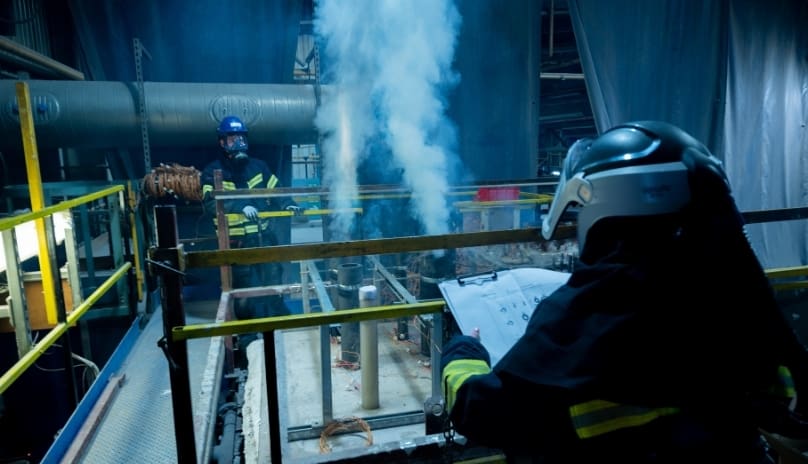
For products with fire-performance claims, the Grenfell Inquiry recommendations go further. They include proposals that manufacturers should provide the regulator with a product’s full testing history and, on request, provide copies of test results supporting fire-performance claims.
This represents an important cultural change for the industry. The question will increasingly become not simply:
“Has this product been tested?”
but:
“What exactly has been tested, under what conditions, what limitations apply, and what evidence supports the claim?”
That distinction matters, particularly in passive fire protection where performance can depend on substrate type, service type, opening size, orientation, seal depth and many other variables.
PRODUCT INFORMATION WILL NEED TO BECOME CLEARER AND EASIER TO ACCESS
The White Paper proposes stronger requirements around product information, marketing and labelling. Manufacturers and other economic operators are expected to provide more comprehensive information covering areas such as:
- Product characteristics
- Intended use
- Technical specifications
- Safe use
- Maintenance
- Disposal
- Evidence supporting product claims
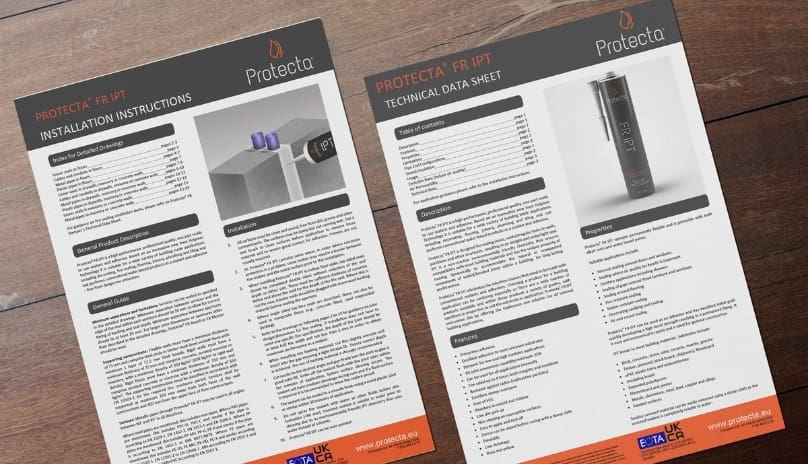
The principle is that people specifying, purchasing and installing construction products should be able to understand what a product is designed to do and how it should be used safely. For manufacturers, this means product documentation should not be treated as an afterthought. Technical data sheets, installation instructions, declarations, certificates, test evidence and marketing claims increasingly need to tell the same story.
DIGITAL PRODUCT INFORMATION IS BECOMING INCREASINGLY IMPORTANT
A major theme of the White Paper is digitalisation. The government wants construction product information to become digitally accessible and, over time, more structured and interoperable.
Proposals include:
- Digital product information becoming the norm
- Unique product identifiers
- QR codes or other digital labels linking to current product information
- Digitally available declarations of performance and conformity
- Greater traceability throughout the supply chain
- Possible future use of digital product records or systems comparable with EU Digital Product Passports.
The government sees this as supporting both the Golden Thread and wider product traceability. For manufacturers, the practical implication is significant. Product information will increasingly need to be maintained as live data rather than static documents that are created once and forgotten.
It also creates an opportunity. Manufacturers that make technical information easy to find, easy to understand and easy to verify can make life considerably easier for designers, contractors and installers.

TESTING AND CERTIFICATION WILL FACE GREATER OVERSIGHT
The government also intends to strengthen the regulation of conformity assessment bodies and the wider testing and certification system. The White Paper proposes a future regime in which UK Conformity Assessment Bodies would require licensing by the national construction products regulator, alongside stronger expectations around independence, competence and acting in the public interest.
This is important because confidence in construction products depends not only on manufacturers, but also on confidence in the organisations assessing and certifying product performance. For manufacturers, greater scrutiny is likely to mean stronger expectations around the management of:
- Test programmes
- Technical assessments
- Certification
- Product changes
- Supporting evidence
- Communication of limitations
ACCOUNTABILITY WILL EXTEND ACROSS THE SUPPLY CHAIN
The proposed reforms make clear that responsibility does not sit solely with manufacturers. Different organisations can take on different responsibilities depending on the role they perform.
For example, the White Paper states that a contractor selecting or substituting a product may take on responsibilities associated with specification or design, while a manufacturer providing design advice may also assume responsibilities linked to that function. This is particularly relevant where products are substituted during a project.
A product that appears similar may not necessarily have the same test evidence, field of application or installation requirements. For specifiers and contractors, product selection therefore needs to be based on evidence rather than assumption.
SUSTAINABILITY INFORMATION WILL BECOME MORE IMPORTANT
Construction product reform is not solely about safety. The White Paper also places greater emphasis on environmental performance. The government intends to maintain consistency, where appropriate, with environmental aspects of the revised EU Construction Products Regulation. This includes the growing use of lifecycle-based environmental information and greater consistency in how environmental performance is reported.
Environmental Product Declarations, or EPDs, are already becoming increasingly important within construction procurement. The White Paper notes that manufacturers are already being asked by customers for product-level embodied carbon information and that EPDs produced in accordance with EN 15804+A2 are widely used for this purpose.
For manufacturers, sustainability data is therefore becoming part of mainstream product information rather than a separate marketing exercise.
What should manufacturers be doing now?
Although much of the reform programme will be introduced progressively and some elements will require future legislation, manufacturers do not need to wait before preparing.
A sensible starting point would be to review whether:
- Product performance claims can be directly linked to supporting evidence
- Testing histories are complete and accessible internally
- Technical documents accurately reflect current approvals
- Product changes are formally assessed for their impact on performance
- Marketing claims align with technical evidence
- Digital product information is current and easy to access
- Environmental data is being developed in a consistent way
- Teams involved in R&D, Technical, Quality, Sales and Marketing understand their responsibilities
For manufacturers operating internationally like Polyseam, it will also be important to monitor both UK reform and the evolving EU Construction Products Regulation.
WHAT SHOULD SPECIFIERS LOOK FOR?
For specifiers, the reforms reinforce the importance of looking beyond headline performance claims. When considering a construction product, questions should include:
- What evidence supports the stated performance?
- Does the tested application reflect the intended use?
- Are there limitations or conditions associated with the test or assessment?
- Is the technical information current?
- Has the manufacturer clearly identified how the product should be installed and maintained?
Good specification increasingly depends on good information.
What should contractors and installers consider?
For contractors and installers, the biggest practical risk is assuming that one product can simply be substituted for another. Even where two products appear similar, their tested applications may be different. Installation should therefore follow the manufacturer’s current instructions and the relevant tested or assessed system.
Where there is uncertainty, technical advice should be sought before installation rather than after. This is particularly important in passive fire protection, where apparently minor changes to a penetration seal can significantly affect its tested performance.
POLYSEAM’S APPROACH
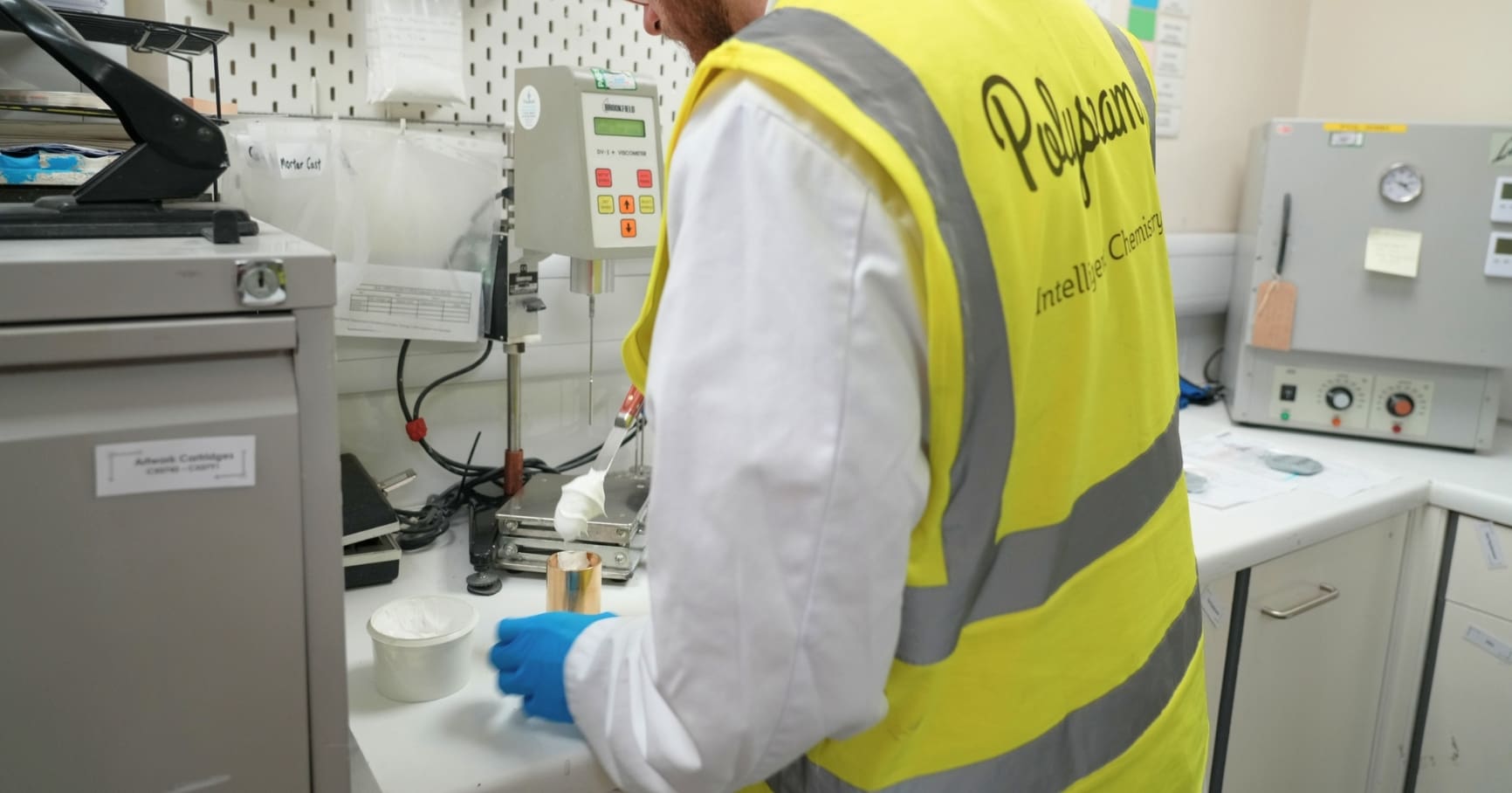
At Polyseam, product development has always involved close collaboration between Research & Development, Technical, Testing, Quality and Manufacturing. For the Protecta range in particular, extensive testing, technical assessments and supporting installation documentation form an important part of how products are brought to market and supported throughout their lifecycle.
We also continue to invest in digital tools, like the Protecta Project Manager Software, technical documentation and Environmental Product Declarations to make information more accessible to customers. The direction outlined in the Construction Products Reform White Paper reinforces something we believe should already form part of responsible manufacturing:
Product performance should be supported by evidence, and that evidence should be communicated clearly.
A change in regulation — and in culture
Construction product reform will ultimately involve new rules, new responsibilities and greater regulatory oversight. But the bigger change may be cultural. The industry is moving toward an environment where transparency, traceability and accountability are expected throughout the life of a construction product. Manufacturers will need to understand their products in greater detail.
Specifiers will need to interrogate evidence more carefully. Contractors will need to ensure products are selected and installed within their tested applications. And customers should increasingly expect manufacturers to be able to demonstrate why the claims they make can be trusted.
For the construction industry as a whole, that can only be a positive direction.
NEED TECHNICAL SUPPORT?
If you have questions about a Polyseam or Protecta product, tested application or supporting technical documentation, speak to our Technical team.
Polyseam. Intelligent Chemistry.
https://protecta.co.uk/products/