Why Water-Based Formulations Matter in Modern Construction Products
Modern construction is changing. Buildings are expected to be safer, more efficient, more sustainable, and healthier for the people who live and work in them. This has placed greater focus on the products used throughout a building, including sealants, adhesives, coatings, fillers, fire protection products, and other specialist construction materials.
For manufacturers, this means product performance is no longer the only measure of success. Customers, contractors, specifiers, and building owners are increasingly looking at how products are made, what they contain, how they perform on site, and what evidence supports their environmental and indoor air quality impact.
At Polyseam, many of the products we manufacture are water-based, with VOC emissions and indoor air quality backed by recognised international standards and available reports. This approach is part of our wider sustainability and environmental policy and reflects our mission of continuously innovating for a safer, more sustainable future.
WHAT ARE WATER-BASED CONSTRUCTION PRODUCTS?
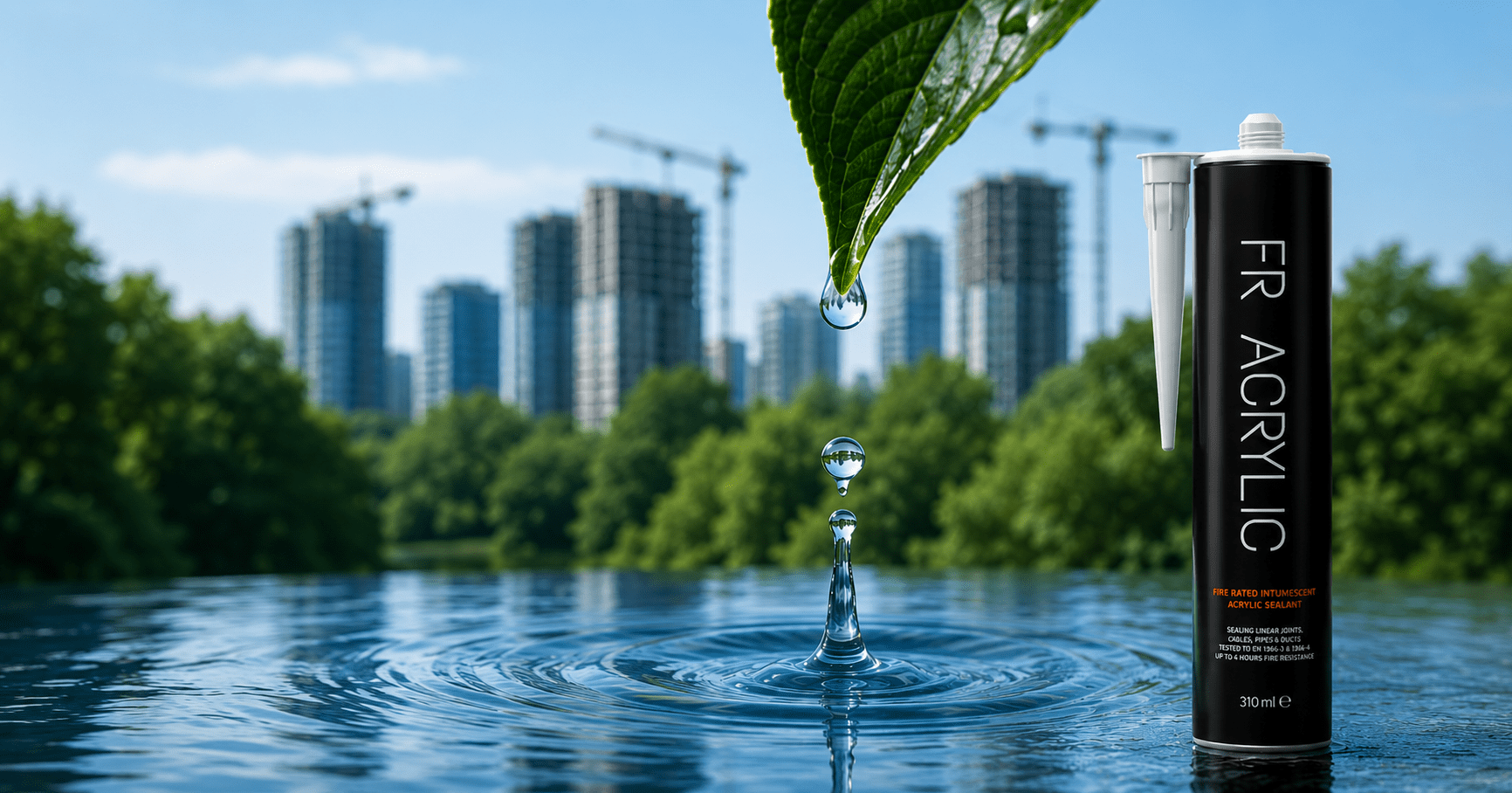
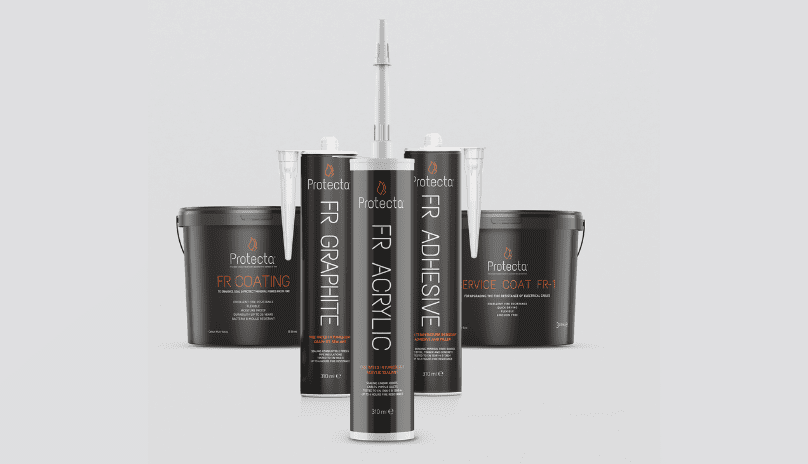
Water-based construction products use water as a key carrier within the formulation, rather than relying heavily on solvent-based systems. This applies to many product types, including sealants (such as Protecta FR Acrylic and FR IPT), coatings (such as Protecta FR Coating, Interior Paint FR-1, and Steel Paint FR-1), adhesives, fillers, and fire protection materials.
The use of water-based formulations can support improved handling, reduced reliance on solvent-heavy systems, and a more responsible approach to product development. However, it is important to be accurate. Water-based does not automatically mean “no emissions” or “zero VOC”. Some VOC emissions may still be present depending on the ingredients and supplied components used in the formulation.
That is why evidence matters.
At Polyseam, we avoid broad environmental claims and instead focus on clear, supportable wording. Many of the products we manufacture are water-based, with VOC emissions and indoor air quality supported by recognised international standards and available reports.
WHY VOC EMISSIONS AND INDOOR AIR QUALITY MATTER
Indoor air quality is an important consideration in modern building design, especially in homes, schools, hospitals, offices, public buildings, and other occupied spaces.
Construction products can contribute to the indoor environment, particularly where products are used internally or in areas with regular occupancy. VOC emissions are therefore a key consideration for specifiers and contractors who need to understand how products may affect the spaces they are used in.
This is especially important as sustainability in construction moves beyond energy use alone. A building is not only judged by how efficiently it performs, but also by how healthy and responsible it is as an environment.
For customers, VOC and indoor air quality reports provide reassurance that product choices are supported by recognised testing and documentation. This helps reduce uncertainty and supports more informed specification.
WATER-BASED FORMULATIONS AND RESPONSIBLE MANUFACTURING
Water-based product development supports a more responsible approach to manufacturing. It is not simply about replacing one ingredient with another. It is about looking at the full product system and understanding how formulation choices affect production, performance, application, handling, sustainability, and customer requirements.
This is where Polyseam’s Intelligent Chemistry approach is important.
A construction product must still perform. It must be reliable, practical to use, and suitable for the application. For passive fire protection products, sealants, adhesives, coatings, and other specialist materials, performance cannot be compromised.
The challenge is to balance:
- Product performance
- Application and usability
- Manufacturing consistency
- VOC emissions and indoor air quality
- Sustainability objectives
- Customer and regulatory requirements
This balance is central to responsible product development.
WHY EVIDENCE IS BETTER THAN BROAD ENVIRONMENTAL CLAIMS
The construction industry is rightly becoming more cautious about environmental claims. Terms such as “eco-friendly”, “green”, “zero impact”, or “no VOC” can be misleading if they are not supported by evidence.
That is why Polyseam’s approach is to use careful, accurate wording. We can say that many of the products we manufacture are water-based. We can also say that VOC emissions and indoor air quality are backed by recognised international standards and available reports where applicable. This is more credible than making unsupported claims.
For customers, this matters because they often need product information for specifications, project documentation, sustainability assessments, procurement reviews, and client requirements. Clear reports and accurate product data help them make better decisions.
SUPPORTING SUSTAINABLE CONSTRUCTION
Sustainability in construction is no longer limited to one part of the supply chain. It involves manufacturers, distributors, contractors, designers, building owners, and end users.
Water-based formulations can form part of a wider sustainability approach, especially when combined with responsible sourcing, efficient manufacturing, waste reduction, packaging improvements, and transparent documentation.
At Polyseam, this sits within a broader CSR strategy that includes environmental stewardship, product sustainability, employee wellbeing, health and safety, community engagement, and stakeholder relationships. Our CSR strategy is built around the belief that responsible business practices should be integrated into daily operations, helping us contribute to a better future for our communities, the construction industry, and the environment.
THE ROLE OF PRODUCT SUSTAINABILITY
Product sustainability starts with understanding the materials, processes, packaging, application, and lifecycle impact of the products being manufactured.
For Polyseam, this includes looking at areas such as raw material optimisation, energy-efficient manufacturing, transportation and distribution, and eco-friendly packaging and disposal. It also includes product systems such as Eco-Foil, which helps reduce cartridge waste during application.
Water-based formulations are part of this wider picture. They show how product chemistry can support both performance and responsibility. However, the key point is that product sustainability must always be considered alongside technical performance. A product still needs to work for its intended purpose, meet relevant requirements, and be supported by the correct documentation.
WHY THIS MATTERS FOR SPECIFIERS AND CONTRACTORS
Specifiers and contractors are under increasing pressure to choose technically suitable products, properly documented and aligned with sustainability goals.
When selecting construction products, they may need to consider:
- Is the product suitable for the application?
- Is it supported by appropriate technical documentation?
- Are VOC emissions and indoor air quality reports available?
- Does the product align with project sustainability requirements?
- Is the manufacturer transparent about product claims?
- Is there technical support available if questions arise?
Water-based products with supporting evidence can help answer some of these questions and give project teams greater confidence.
WHY THIS MATTERS FOR PRIVATE LABEL CUSTOMERS
For private label customers, product responsibility matters because the manufacturer behind the product also supports the reputation of the customer’s brand.
When a customer places their own brand on a product, they need confidence in the formulation, manufacturing process, documentation, packaging, and technical support behind it.
Polyseam supports private label customers by combining manufacturing experience, product knowledge, quality systems, and technical understanding. Water-based product development, VOC and indoor air quality evidence, and sustainability-led thinking can all help private label customers bring more responsible construction products to market.
INTELLIGENT CHEMISTRY IN PRACTICE
For Polyseam, Intelligent Chemistry means developing and manufacturing products with purpose. It means understanding how products perform, how they are used, how they are manufactured, and how they contribute to safer, more sustainable construction.
Water-based formulations are one example of this approach. They demonstrate how product chemistry can support practical application, responsible manufacturing, indoor air quality considerations, and sustainability goals.
But Intelligent Chemistry is not only about formulation. It is also about the people, processes, testing, documentation, and continuous improvement behind every product.
BUILDING A SAFER, MORE SUSTAINABLE FUTURE
The future of construction products will be shaped by performance, transparency, sustainability, and trust.
Water-based formulations matter because they reflect a more considered approach to product development. They help support responsible manufacturing, indoor air quality considerations, and better product choices for modern construction.
At Polyseam, we will continue to develop and manufacture products that support safer buildings, more sustainable practices, and the evolving needs of our customers. Because building a safer future should also mean building a more sustainable one.
SPEAK TO POLYSEAM
To learn more about Polyseam’s water-based products, VOC emissions and indoor air quality reports, private label manufacturing, or sustainability approach, contact our team.
Polyseam. Intelligent Chemistry.
https://protecta.co.uk/products/